Showing posts with label Bill Sharman. Show all posts

2.28.2016

Bill Sharman, Los Angeles Laker


http://blog.footaction.com/wp-content/uploads/2013/03/71Lakers.jpg

The first thing Bill Sharman did after hiring KC Jones was assign Jones the task of devising a defensive scheme that would fully leverage the assets brought to the table by the top eight players on the 1971-72 Lakers’ roster. Defense wins championships, and Sharman was convinced that the Lakers were not a team in decline. With Jerry West, Gail Goodrich, Wilt Chamberlain, and a versatile supporting cate, Sharman saw this Laker team as one with unlimited potential.

Although the obvious starting point for building a defense might have been Wilt Chamberlain, Jones started with Gail Goodrich. Listed at 6-3, Goodrich’s nickname, “Stumpy,” belied a shorter stature. Goodrich could light it up at will against just about any size defender, but taller opposing guards could do the same against him. The Hall of Fame defender Jones taught Goodrich how to play a pesky, bulldog style of defense despite size disadvantage.

Next Sharman sat down with West, Chamberlain, and Goodrich to discuss the running game he wanted to implement. Rather than tiring the old men out, Sharman explained, a run-and-gun style would create lots of easy baskets, and the opportunities to build big leads, which would give the Lakers "Big Three" a chance to rest. Goodrich and West were thrilled. Even Chamberlain was excited. Having spent most of his career playing in offenses designed to wait for him to lumber down from one end of the court to the other, Chamberlain understood that rebounding the ball on defense and then throwing an outlet pass to start a fast break would save him innumerable trips up and down the floor.

That was easy. 

What followed was not.

Next on the agenda was Sharman’s old favorite, the morning shootaround. Invented by Sharman while still a player during the 1955-56 season, Sharman found that putting in a little work the morning before a game had increased his field-goal percentage and his free-throw percentage. His teammates noticed the improvement, and soon began joining him for the morning shootarounds. They soon became a staple on the Boston Celtics and the championship teams he coached in the ABL and the ABA. Rick Barry and the San Francisco Warriors resisted the Sharman's morning shootarounds, and they lost in the Finals to Wilt in 1967. 

Speaking of Wilt, he didn’t like the idea of waking up early, either. He typically stayed out all night entertaining his lady friends, and usually didn’t rise until after 10 a.m. in the morning. Sharman explained the importance of the morning shootaround to increasing “muscle memory” and told Chamberlain that the Los Angeles Lakers still hadn’t maxed out their potential. If he wanted another title, the morning shootaround needed to be a part of the puzzle. Wilt relented, “as long as we win.”
Which brings us Elgin Baylor.

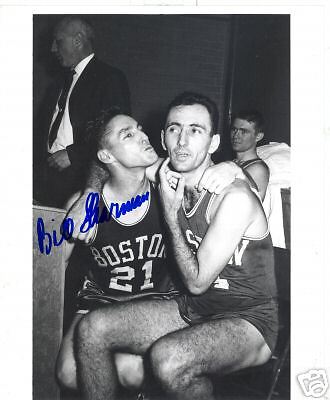
10.23.2009

Bill Sharman and the 1971-72 Los Angeles Lakers


Part 6

None of the success surprised Bill Sharman.

He had won 4 NBA titles as a player with the Boston Celtics. He'd won two more titles as a coach, one with the Cleveland Pipers of the ABL and one with the Utah Stars of the ABA. His San Francisco Warriors nearly defeated the vaunted 1967 Philadelphia 76ers during the NBA Finals, before succumbing in 6 games. So finishing the 1971-72 season 69-13, beating teams by an average of 16.3 points per game, including one game where the Lakers won by 63, while glorious and record-setting, wasn't a surprise.

Nor was it the goal.

Sharman had promised Lakers' owner Jack Kent Cooke a championship, something that had eluded the Lakers since they moved from Minneapolis. Eight times the Lakers had played in the NBA Finals over the last 12 years, and eight times they had lost. They had lost when they were underdogs, they had lost when they were favorites, and they had lost to a New York Knicks team whose best player hobbled around on one leg but somehow still managed to dominate a healthy Wilt Chamberlain.

Once Sharman got rid of aging, injured, and selfish Elgin Baylor early in the regular season, everything else fell into place. The Lakers beat the defending NBA champions Milwaukee Bucks four out of five games during the regular season. They swept the Chicago Bulls during the first round of the NBA Playoffs. In the Western Conference Finals the Lakers met up again with the Milwaukee Bucks. Just a year earlier, the two teams had faced-off in the WCFs, with the Bucks winning handily, 4-1. Laker fans were frothing at the mouth for revenge. Two more series and they'd finally taste victory after so many years of disappointment.

The Lakers, however, would experience more disappointment before climbing the mountain.

The Bucks jumped to a big lead in game one, a lead that became even bigger in the second half when Milwaukee outscored the purple 31-8 in quarter number 3. It was total domination from wire-to-wire, as the Bucks cruised to a 93-72 win. The game was played at the Forum in LA, and the fans let the home team know what they thought, booing them for almost the entire second half. Jerry West was crushed. Sharman didn't sleep again for the rest of the series. A Lakers' beat writer vowed not to watch another game, proclaiming he was "tired of covering losers."

The Lakers then managed to fall behind in game 2, and now faced the daunting task of traveling to Milwaukee down 2-0. At halftime, Sharman and Lakers' assistant KC Jones focused entirely on making defensive adjustments for the second half. By the fourth quarter, the adjustments started to bear fruit, and the Lakers grinded out a one-point win, 135-134. Jones continued to make adjustments to his defensive schemes, and the result was three more Laker wins in the next four games, with the Bucks being held to 105 points, 90 points, and 100 points in those contests.

Wilt's exclusive mission, Jones told him, was to play defense. In particular, Chamberlain was expected to frustrate or intimidate big man Kareem Abdul-Jabbar every time the Bucks had the ball. In short, Wilt was asked to play Bill Russell to Jabbar's Chamberlain. The defensive adjustments worked, as the Lakers closed out the WCFs in six games, and kept on working all the way through the NBA Finals, where the Lakers dispatched with the Knicks in five games.

The Lakers had won their first championship since George Mikan roamed the hardwood, and they had two Celtics--Bill Sharman and KC Jones--to thank for it.

10.22.2009

Bill Sharman and the 1971-72 Los Angeles Lakers

Part 5

On Sunday, January 2, 1972, the Boston Celtics traveled to Los Angeles where they played a regular season basketball game against the Los Angeles Lakers. Big Whoop, right? The two teams had played dozens of times before, only during the NBA Finals when the stakes were higher, much higher. Yet the stakes were plenty high for this regular season tilt, at least as far as the NBA was concerned.

The Lakers entered the Celtics' game having won a record 30 in a row. Seven days later the Purple were scheduled for a rematch with the defending NBA champions, the Milwaukee Bucks, who the Lakers had defeated during an earlier regular season contest. That game was in LA. The rematch was in Wisconsin. The next Bucks-Lakers game was already being touted as the Super Bowl of basketball, and would be broadcast on national TV.

Too bad Tommy Heinsohn and the Boston Celtics had other ideas. The Celtics took immediate command of the game. Then the refs intervened. Before the second quarter came to an end, the refs had given the Lakers 27 foul shots, while the Celtics had taken 8. The second half was a repeat of the first.

The Lakers won, 122-113, staving off a Celtics' late-game comeback with, you guessed it, free throws. "Havlicek didn't shoot a free throw until the last minute of the third quarter," Celtics coach Tommy Heinsohn complained. "Pretty damn amazing for a guy who handles the ball sixty-percent of the time."

Oddly enough, the league got what it wanted. The Lakers beat the Celtics and then won the next two games, heading into Milwaukee not having lost since October. The Bucks crushed the Lakers, 120-104, and the game wasn't even as close as the score. So the streak officially came to an end at 33.

Celtics Nation says the streak ended at 30.

10.21.2009

Bill Sharman and the 1971-72 Los Angeles Lakers

Part 4

When NBA executives scoffed at Bill Sharman's plans to turn the Los Angeles Lakers soft and porous defense into a league-leading defense, one player fueled their skepticism. When outgoing Laker coach Joe Mullaney openly ridiculed talk of turning the Los Angeles Lakers slow and plodding offense into a fast-breaking machine, one player fueled his skepticism. When NBA pundits described the Lakers as a team whose championship aspirations had set with evening sun, they were thinking of one player.

Elgin Baylor.

In his day, Baylor was his era's Dr. J. He was his era's Michael Jordan. But in the fall of 1971, Elgin Baylor was 37-years-old, slowed by injuries, and a shadow of his former self. Speaking of shadows, he could barely guard his own or keep up with it on a fast break. During practice, Baylor typically loafed it, which meant that his team loafed it, which meant that his team lost the scrimmages. Practices sucked with Baylor on the floor.

During the first nine games of the 1971-72 NBA season, Baylor's numbers did not paint an accurate picture of his state of decline. In a little more than 20 MPGs, Baylor was averaging just under 12 PPG, just over 6 RPG, and exactly 2 APG. Not bad. But the Lakers were 6-3, and Baylor was getting abused on defense and preventing the offense from running. Worse, the Lakers had lost two games in a row, and Wilt wasn't showing up for the morning shootarounds. The team was undergoing a mild rebellion.

Sharman had seen enough. He went to Lakers' owner Jack Kent Cooke and told him that Baylor needed to "retire or be retired." Cooke didn't like the idea. Sharman said the alternative was to sit Baylor at the end of the bench for games and not use him in practice. Cooke eventually relented, but only after telling Sharman that he now had a target on his back, and the Lakers had better start playing winning Celtics' basketball like Sharman promised or the purple and gold would find a new coach.

So Baylor was offered a cushy job in the front office, and after much hemming and hawing, agreed to retire.

How did the Lakers respond?

Their practices were a little more lively and competitive.

Oh yeah.

One more thing.

They immediately busted off an NBA record 33 wins in a row.

Well, except for the game where the NBA conspired with the refs to give the Lakers a win over the Celtics to keep the streak alive for a showdown with the defending champion Milwaukee Bucks.

But we'll talk more about that tomorrow.

Bill Sharman and the 1971-72 Los Angeles Lakers

Part 3

The first thing Bill Sharman did after hiring KC Jones was to assign Jones the task of devising a defensive scheme that would fully leverage the assets brought to the table by the top eight players on the 1971-72 Lakers' roster. Defense wins championships, and Sharman was convinced that the Lakers were not a team in decline. With Jerry West, Gail Goodrich, Wilt Chamberlain, and a versatile supporting caste, Sharman saw this Laker team as one with unlimited potential.

Although the obvious starting point for building a defense might have been Wilt Chamberlain, Jones started with Gail Goodrich. Listed at 6-3, Goodrich's nickname, "Stumpy," belied a shorter stature. Goodrich could light it up at will against just about any size defender, but taller opposing guards could do the same against him. The Hall of Fame defender Jones taught Goodrich how to play a pesky, bulldog style of defense despite size disadvantage. Goodrich would set the tone for the Laker team as a whole as the season unfolded.

Next Sharman sat down with West, Chamberlain, and Goodrich to discuss the running game he wanted to implement. Rather than tiring out the old men, Sharman explained, a run-and-gun style would create lots of easy baskets, and the opportunities to build big leads, which would give the Lakers "Big Three" a chance to rest. Goodrich and West were thrilled. Even Chamberlain was excited. Having spent most of his career playing in offenses designed to wait for him as he lumbered down the court, Chamberlain understood that rebounding the ball on defense and then zipping an outlet pass to start a fast break would save him innumerable trips up and down the floor.

That was easy.

What followed was not.

Next on the agenda was Sharman's old favorite, the morning shootaround. Invented by Sharman while still a player during the 1955-56 season, Sharman found that putting in a little work the morning before a game had increased his field-goal percentage and his free-throw percentage. His teammates noticed the improvement, too, and soon began joining him for
the morning shootarounds. The game-day shootaround soon became a staple on the Boston Celtics and the championship teams Sharman coached in the ABL and the ABA. Rick Barry and the San Francisco Warriors resisted the Sharman's morning shootarounds, and they lost in the Finals to Wilt in 1967,

Speaking of Wilt, he didn't like the idea of waking up early, either. He typically stayed out all night entertaining his lady friends, and usually didn't rise until after 10 a.m. in the morning. Sharman explained the importance of the morning shootaround, telling Chamberlain that even 15 to 30 minutes of practice the morning before a game improved an athlete's "muscle memory." Sharman also stressed that the Los Angeles Lakers still hadn't maxed out their potential, notwithstanding their recent failures. If he wanted another title, the morning shootaround needed to be a part of the puzzle. Wilt relented, "as long as we win."

Which brings us Elgin Baylor.

Bill Sharman and the 1971-72 Los Angeles Lakers

Part 2

As negotiations began, Bill Sharman held the upper hand over Laker owner Jack Kent Cooke. Not only were the Lakers perceived as a team in decline, Sharman was being advised by friends and family not to take the job. NBA executives scoffed at Sharman's plans to turn the aging and injured Laker team into a fast-breaking outfit. Sharman still wanted the job. But he had one condition.

Sharman: I need an assistant coach.

Cooke: Bill, Red never had an assistant in Boston. You didn't have an assistant when you won the ABL championship with the Cleveland Pipers. You didn't have an assistant when you won the ABA championship with the Utah Stars. You didn't even have an assistant when you took the vaunted Philadelphia 76ers to six games in the '67 Finals as coach of the San Francisco Warriors. You don't need an assistant.

Sharman: Do you want to win?

Cooke: Yes.

Sharman: Do you want me?

Cooke: Yes, but Bill, I own the team. I have 55 people under me. I don't have an assistant.

Sharman: When was the last time the Lakers won a championship?

Cooke: Who are you going to bring in?

Sharman: KC Jones.

Cooke: Another Celtic? They're gonna fry me in the press.

Sharman: (observing the silence)

Cooke: You two better win. Consider yourself on a short leash.

And so it was. Jack Kent Cooke hired former Celtic great Bill Sharman to coach the 1971-72 Los Angeles Lakers, and permitted him to hire another Boston Celtic, KC Jones, as an assistant.

It didn't take long until the Lakers were playing Celtics' style basketball.

Bill Sharman and the 1971-72 Los Angeles Lakers

Part 1

To the casual fan of professional basketball, the 1971-72 Los Angeles Lakers might seem like an easy puzzle to crack. The team won a record 33-straight games on the way to their first NBA title in Los Angeles. How'd they do it? Easy, the basketball novice might say. You add Wilt Chamberlain to a line-up that already includes Elgin Baylor and Jerry West, and wah lah! You have yourself a championship.

Sounds good to me.

But it isn't true.

Yes, Wilt Chamberlain was added to the Lakers' lineup, but that was back before the 1968-69 season started, a season that ended in defeat for the purple, with their arch nemesis, the Boston Celtics prevailing in 7 games to win their 11th championship in 13 years. Yes, the Lakers still had Elgin Baylor on the roster when the 1971-72 season started. But Baylor only played the first nine games before being urged to retire because he was too slow and too selfish.

Yes, Jerry West was on the Lakers' roster. But he was just coming off knee surgery and was a question mark to start the season. Speaking of question marks, the entire Laker team was a question mark. The Lakers had lost in the Finals eight times since 1959, seven of the losses coming at the hands of the dreaded GREEN, the Boston Celtics. Acquiring Chamberlain was a move the Lakers expected to put them over the top. But all the Lakers did was continue to wilt.

During the 1969-70 NBA Finals, the Lakers managed to lose in seven games to a New York Knicks team whose best player was limping around the floor after tearing a thigh muscle. The next season, Lew Alcindor won league MVP, and the Milwaukee Bucks easily dispatched the Lakers in 5 games during the WCFs.

Meanwhile, the Lakers were getting old. No Laker starter was younger than 30, Gail Goodrich, and he was 29. Chamberlain was 35, Jerry West was 33, Elgin Baylor was 37, and reserves LeRoy Ellis and Flynn Robinson were 31 and 30, respectively. The huge salaries that owner Jack Kent Cooke had guaranteed to Baylor, West, and Chamberlain prevented the Lakers from revamping their roster. As a result, most pundits predicted that the Lakers would begin a free fall decline, while the Bucks and Knicks would fight it out for top dog.

Enter Bill Sharman. and KC Jones.

10.19.2009

Sharman Inducted

Bill Sharman was formally inducted into the Hall of Fame last night - for the second time. His first induction came 28 years ago, when his 11 years of NBA playing service - all but one in Boston - were honored. Last night's induction was for his career as a head coach, when he won titles in three leagues (including the NBA) and was coach of the year in different leagues.

Sharman joins John Wooden and Lenny Wilkens as two-time inductees. But he needs to be inducted one more time - as a contributor. For it is Bill Sharman who introduced what is now a staple of NBA life - the morning shootaround. He started doing it on his own at a high school gym near his home in Needham, which is where he lived when he played for the Celtics. He then decided to use it in his first head coaching gig - with the George Steinbrenner-owned Cleveland Pipers of the American Basketball League - and, lo and behold, the Pipers won the title that season (1961-62).

Sharman later used the shoot around with his NBA teams in San Francisco (1966-68) and in Los Angeles with the Lakers from 1971-76. In each instance, his team advanced to the NBA Finals in his first season. He even got noted morningphobe Wilt Chamberlain to buy into his new scheme, although, Sharman admitted yesterday, Wilt was a little skeptical.

"You know I don't like to get up early in the morning," Chamberlain told Sharman, when the coach broached the shootaround subject at a lunch shortly before the start of what would be a championship season in 1971-72. Sharman remembered two other things about that day: Chamberlain picking him up in a Rolls-Royce and not having his wallet with him to buy lunch.

"But Wilt said he'd give it a try if he saw that it helped the team," Sharman recalled. "I told him it would be good if he just showed up. Well, we got off to a good start that year, so, thank goodness for that. And, to my recollection, Wilt only missed two all season and he called me both times to tell me."

The shootaround is now up there with per diem and traveling as de facto parts of NBA life. Maybe some coach along the way would have figured out that it can be a good thing to get players to break a sweat on the day of a night game. But Sharman is the first one who did it, and made it a part of his routine.

He said the idea was hatched in the final four to five years of his playing career. As he explained it, he always had nervous energy before games and, eventually, he decided to shoot off some of the angst at the neighborhood gym. He then had an epiphany.

"I would just go to the gym and take a few shots, but I noticed that I suddenly felt fresher and more confident during games," he said. "So I started doing it for all the games. And my performance was much better."

Sharman would shoot by himself in the Needham gym when the Celtics were home. When they were on the road, he'd have Red Auerbach arrange for a gym to be available, and Sharman would often be accompanied by Gene Conley, who, like Sharman, also had his moments as a professional baseball player. (Sharman had a stint with the Dodgers.)

Sharman, typically, pointed to a difference in his free throw shooting as a result of this new exercise. He was pretty good anyway - around 85 percent in his first five years with the Celtics. But his percentage soared to 90.3 percent in his final five years with the Celtics. Sharman led the league in free throw shooting seven times and says the free throw is a lost art these days because too many kids work on their dunks instead of their freebies.

But free throws weren't the only area of improvement. Sharman's scoring picked up as well. In his first five seasons with Boston, Sharman never averaged more than 19.9 points a game. In 1955-56, the last year before Bill Russell arrived, that was sufficient to lead the team. He then led the team in each of the next three years, averaging 21.1, 22.3, and 20.4 points.

"I'm not bragging about that," he said almost apologetically, "because the Celtics played a team game. But my performance was better and I credit that to the extra shooting I did. And I said to myself, `If I ever coach, I'm going to do that for my team.' "

That opportunity came in January 1962. The Los Angeles Jets of the ABL folded midway through the season and then surfaced in Cleveland as the Pipers. The Jets' coach, John McLendon, resigned Jan. 28 and Sharman took over. The Pipers won the ABL title and the shootaround was born.

The concept was still largely unknown or not utilized until the Lakers' historic 1971-72 season, when the team won an NBA-record 33 straight. During that season, the Lakers won 69 games, only once failed to reach 100 points, and averaged 121 for the season. With their winning streak and subsequent title, and with luminaries such as Jerry West and Gail Goodrich (and, to a lesser extent, Chamberlain) buying into the shootaround, it became the fixture that it is today.